Mind

Box breathing for beginners: how it works and what the research says

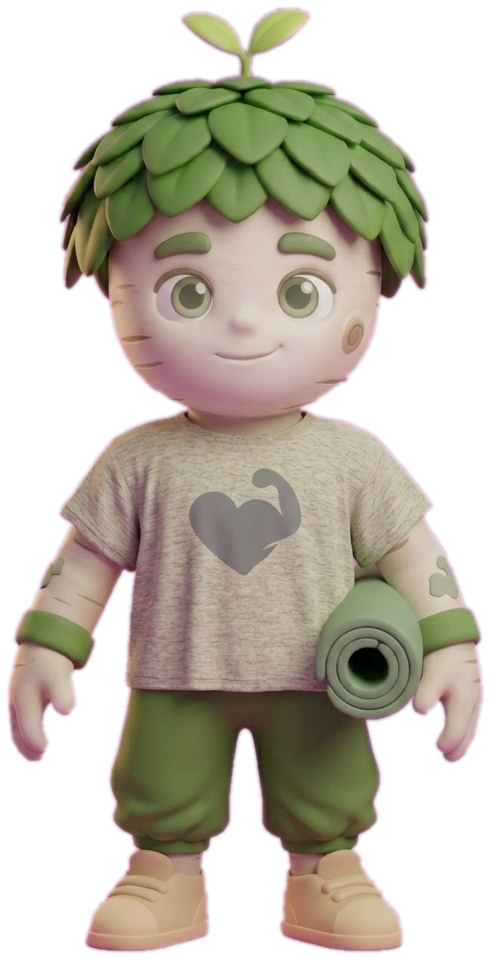
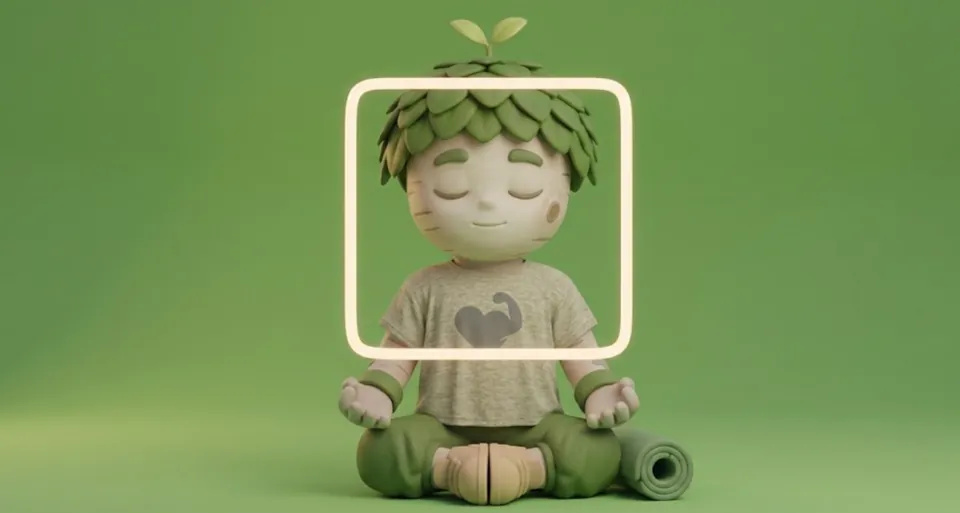
Crew sceneTwig breathing calmly outdoors with a soft square-shaped light motif floating gently
Trace the box. One lap of the square is one breath: in, hold, out, hold.
In one line

Box breathing is four equal steps (breathe in, hold, breathe out, hold), and it's one of several slow-breathing patterns that research links with feeling calmer, though the evidence for box breathing on its own is thinner than its popularity suggests.

Twig

Twig here.

Breathe first.

…

Okay. Now we can start.

What box breathing is

Box breathing is a pattern with four equal sides, like a square:

  1. Breathe in for a count of four.
  2. Hold, lungs full, for four.
  3. Breathe out for four.
  4. Hold, lungs empty, for four.

Then start again. That's one box.

The equal holds are what make it different from ordinary slow breathing. They give your attention a steady rhythm to follow, which is why some people like to trace a square with a finger or their eyes as they go.

A four-count box takes about 16 seconds, so you breathe roughly three to four times a minute. That's slow. Most of the research on breathing and calm is about slow breathing in general, so let's look at that.

What the research says

Slow breathing, in general. A 2018 systematic review looked at 15 studies of slow breathing techniques, defined as fewer than 10 breaths a minute, in healthy people [4]. The studies linked slow breathing with changes in heart rate variability (a measure of how the gap between heartbeats changes, often used as a marker of the body's "rest and digest" activity), and with people reporting more comfort, relaxation and alertness and less anxiety, anger and confusion [4].

Breathwork and stress. A 2023 meta-analysis of randomised controlled trials found that breathwork was linked with lower self-reported stress than control conditions, with a small-to-medium effect. It found similar effects for anxiety and low mood [3]. The authors also urged caution, calling for better-designed studies to avoid "a miscalibration between hype and evidence" [3]. Fair.

Box breathing compared with other techniques. A 2023 Stanford randomised trial asked people to do five minutes a day, for a month, of one of three breathing exercises or of mindfulness meditation. Box breathing was one of the three [2]. Breathwork overall improved mood more than meditation, with the biggest benefits from "cyclic sighing", a pattern built around long out-breaths [2]. So box breathing was part of the group that helped, but it wasn't the standout.

One honest study. A 2025 study of 84 college students compared box breathing, 4-7-8 breathing and breathing at six breaths a minute in a single session [5]. The authors pointed out that, for all their popularity, box and 4-7-8 breathing have "little empirical support" [5]. Breathing at six breaths a minute raised heart rate variability more than the other two, and none of the patterns made a meaningful change to mood or blood pressure in that one session [5].

What this adds up to: slow, steady breathing has decent evidence behind it [3][4]. Box breathing is one tidy way to do slow breathing, and many people find the counting helps. It's a tool, not a cure.
Bar chart

Breaths a minute by pattern

Breaths a minute by pattern
Labela minute
Box (4-4-4-4)3.75
4-7-83.2
Six a minute6
Source: patterns from the article; the 'slow breathing' threshold is from Zaccaro et al. 2018 [4].

How to try it

The NHS describes a simple calming breath for stress, anxiety and panic: breathe gently into your belly, in through the nose and out through the mouth, counting from one to five on the way in and again on the way out, for at least five minutes [1]. Box breathing is a close cousin, with added holds.

Our box breathing tool paces you through it. Pick a length, follow the square on screen, and it counts the rounds so you don't have to. Try box breathing →

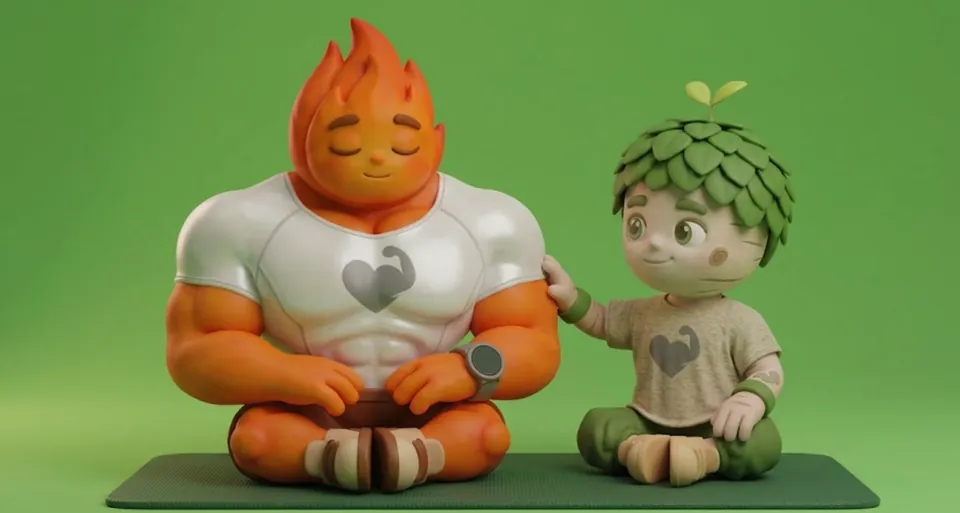
Crew sceneEmby sitting on a gym mat doing a calming breathing exercise with Twig guiding him
Guest cameo

Gust: Four counts?! I count faster than that just waiting for the kettle!

Twig: That's rather the point. Slow down. Trace the square with me.

Try it now

Try one box now

Ready when you are

0 done this round

Feel light-headed? Stop and breathe normally.

Full tool with sounds →
A kind word

Holds aren't for everyone. If you feel light-headed or uncomfortable, stop and breathe normally — the no-holds easier version below is one tap away.

A few things people find useful:

  • Sit or lie comfortably, and if you can, loosen any clothing that makes breathing harder [1].
  • Keep it gentle. The breath should flow, not strain [1].
  • Start short. One to five minutes is a lovely start.
  • If you feel light-headed or uncomfortable, stop and breathe normally. Holds aren't for everyone.

The easier version

The easier version

Skip the holds.

Breathe in for four. Breathe out for four. That's it.

This is very close to the NHS calming breath, which has no holds at all [1]. If four feels rushed, try the NHS count of five [1].

Small steps still count.

When calm isn't enough

Support

Breathing exercises help with calm. They aren't a substitute for support, and they can't fix everything.

If things feel heavy, you don't have to carry it alone:

  • Samaritans: call 116 123, free, from any phone, day or night [6]. samaritans.org
  • Mind: information and support at mind.org.uk
  • Beat, the UK eating disorder charity: beateatingdisorders.org.uk
  • NHS: for urgent help with your mental health, contact NHS 111 or ask for an urgent GP appointment. If someone's life is at risk, or you don't feel you can keep yourself safe, call 999 or go to A&E [7].
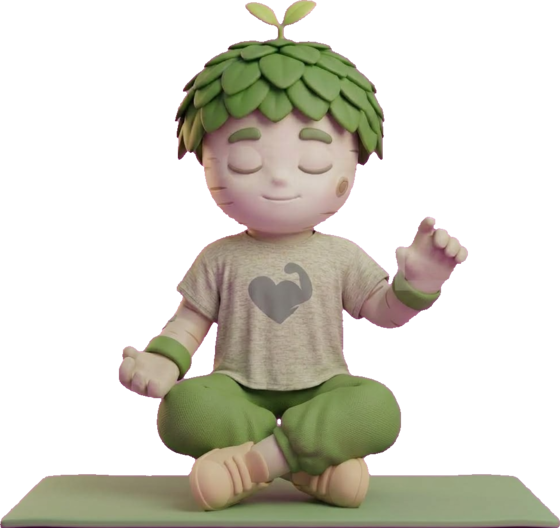
Twig seated on a yoga mat, tracing a square in the air
Free tool

Box breathing

In for 4, hold for 4, out for 4, hold for 4. Four sides, one quieter head.

Try it →
FAQ

Does box breathing actually work? Slow-breathing techniques and breathwork in general have been linked with lower stress and anxiety in research [3][4]. Box breathing itself has been studied less, and one single-session study found little effect on mood compared with other patterns [5]. Many people still find the rhythm helpful.

How long should I do box breathing for? The Stanford trial used five minutes a day [2], and the NHS suggests at least five minutes for its calming breath [1]. Starting with one minute is fine.

Is box breathing better than other breathing exercises? Not according to current research. In one trial, a pattern focused on long out-breaths improved mood more [2], and in another, breathing at six breaths a minute raised heart rate variability more [5].

Roots before branches. Breathe first.

How we check

Checked against 7 sources · Updated 29 September 2026 · Expert review: not yet

kind.fit shares information, not medical advice. If something doesn't feel right, talk to your GP or call NHS 111.

Sources
  1. NHS. "Breathing exercises for stress." https://www.nhs.uk/mental-health/self-help/guides-tools-and-activities/breathing-exercises-for-stress/ (accessed 29 September 2026)
  2. Balban MY, et al. "Brief structured respiration practices enhance mood and reduce physiological arousal." Cell Reports Medicine, 2023;4(1):100895. https://pubmed.ncbi.nlm.nih.gov/36630953/ (accessed 29 September 2026)
  3. Fincham GW, Strauss C, Montero-Marin J, Cavanagh K. "Effect of breathwork on stress and mental health: A meta-analysis of randomised-controlled trials." Scientific Reports, 2023;13:432. https://pubmed.ncbi.nlm.nih.gov/36624160/ (accessed 29 September 2026)
  4. Zaccaro A, et al. "How Breath-Control Can Change Your Life: A Systematic Review on Psycho-Physiological Correlates of Slow Breathing." Frontiers in Human Neuroscience, 2018;12:353. https://pubmed.ncbi.nlm.nih.gov/30245619/ (accessed 29 September 2026)
  5. Marchant J, Khazan I, Cressman M, Steffen P. "Comparing the Effects of Square, 4-7-8, and 6 Breaths-per-Minute Breathing Conditions on Heart Rate Variability, CO2 Levels, and Mood." Applied Psychophysiology and Biofeedback, 2025;50(2):261–276. https://pubmed.ncbi.nlm.nih.gov/39864026/ (accessed 29 September 2026)
  6. Samaritans. "Contact a Samaritan." https://www.samaritans.org/how-we-can-help/contact-samaritan/ (accessed 29 September 2026)
  7. NHS. "Where to get urgent help for mental health." https://www.nhs.uk/nhs-services/mental-health-services/where-to-get-urgent-help-for-mental-health/ (accessed 29 September 2026)
The kind.fit letter

One kind email a week. You pick the topics — sign-up is coming soon.

Tick a topic to say what you want to hear about first.